Logistics, small and medium enterprises, and an unappealing outlook: Is there a solution?
5 Feb 20256 min read

Summary
- Singapore’s logistics sector faces mounting challenges from a shrinking labor pool and an aging population, making it increasingly difficult for small and medium enterprises (SMEs) to attract and retain talent. While multinational corporations continue to thrive due to global reputations and resources, SMEs struggle to compete, highlighting the urgent need for technological adoption to maintain competitiveness.
- Industry 4.0 technologies, particularly automation, present a practical solution to these challenges by streamlining operations and reducing the reliance on manual labor. With Singapore ranking second globally in robot adoption, automation is helping logistics SMEs enhance productivity, improve job appeal, and align with national goals to build a future-ready, technology-driven workforce.
- However, barriers remain as SMEs often lack the capital, technical expertise, and scale to adopt advanced automation at pace with larger firms. Solutions such as OnRobot’s D:PLOY platform are helping bridge this gap by offering accessible, cost-effective automation options, enabling SMEs to modernize operations, boost efficiency, and strengthen their position within Singapore’s evolving logistics ecosystem.
It is a numbers game when it comes to skilled labor in Singapore. After falling to a historic low of 0.97 earlier in the year, Singapore’s dwindling fertility rate does not bode well for the future of the nation’s workforce. In fact, one in four citizens will be aged 65 and older come 2030, putting strain on the workforce and sectors that typically rely on physical labor.
The logistics sector is one example, and its physical nature means it is viewed less favorably compared to other trending sectors. This comes in spite of strong demand for industrial spaces due to supply chain adjustments amidst international corporations making Singapore their supply-chain hub, as logistics continues to paint an unappealing image for young Singaporeans entering the workforce.
While these international corporations still find enough talent to operate comfortably due to their global reputation, Small and Medium Enterprises (SMEs) within the sector find it particularly difficult to compete for incoming talent due to fewer resources and less-attractive compensation packages.
Logistical SMEs in Singapore must then turn to other solutions to both attract talent as well as meet operational demands in light of these challenges — which is where Industry 4.0 comes in.
Automation Adoption
Industry 4.0 holds the potential to alleviate these challenges for SMEs and create a vibrant logistics sector in Singapore. Through smart technology and the integration of new advancements, Industry 4.0 augments existing roles and supplements human tasks with the aid of automation.
In fact, organizations in Singapore are well aware of the benefits automation brings. Singapore ranks number two in robot adoption worldwide with a recorded density of 730 robots per 10,000 employees — one spot behind world-leading South Korea. Robotics adoption in Singapore has grown 27% annually since 2015, with the nation positioning itself with a proactive approach in adopting cutting-edge technology to boost productivity and operational efficiency. Automation is seen as a key solution to Singapore’s manpower woes, with 75% of organizations struggling to find and hire skilled talent in 2024.
The adoption of automated technology is addressing key challenges faced by the logistics SMEs ailing in manpower, which range from operational efficiency to talent attraction. For one, automation allows routine and time-intensive tasks to be streamlined, which allows for smoother workflows, faster decision-making, and improved accuracy in inventory and order management. This optimisation minimizes operational bottlenecks, enabling SMEs to handle larger volumes with ease and maintain competitive customer service standards – even during peak periods.
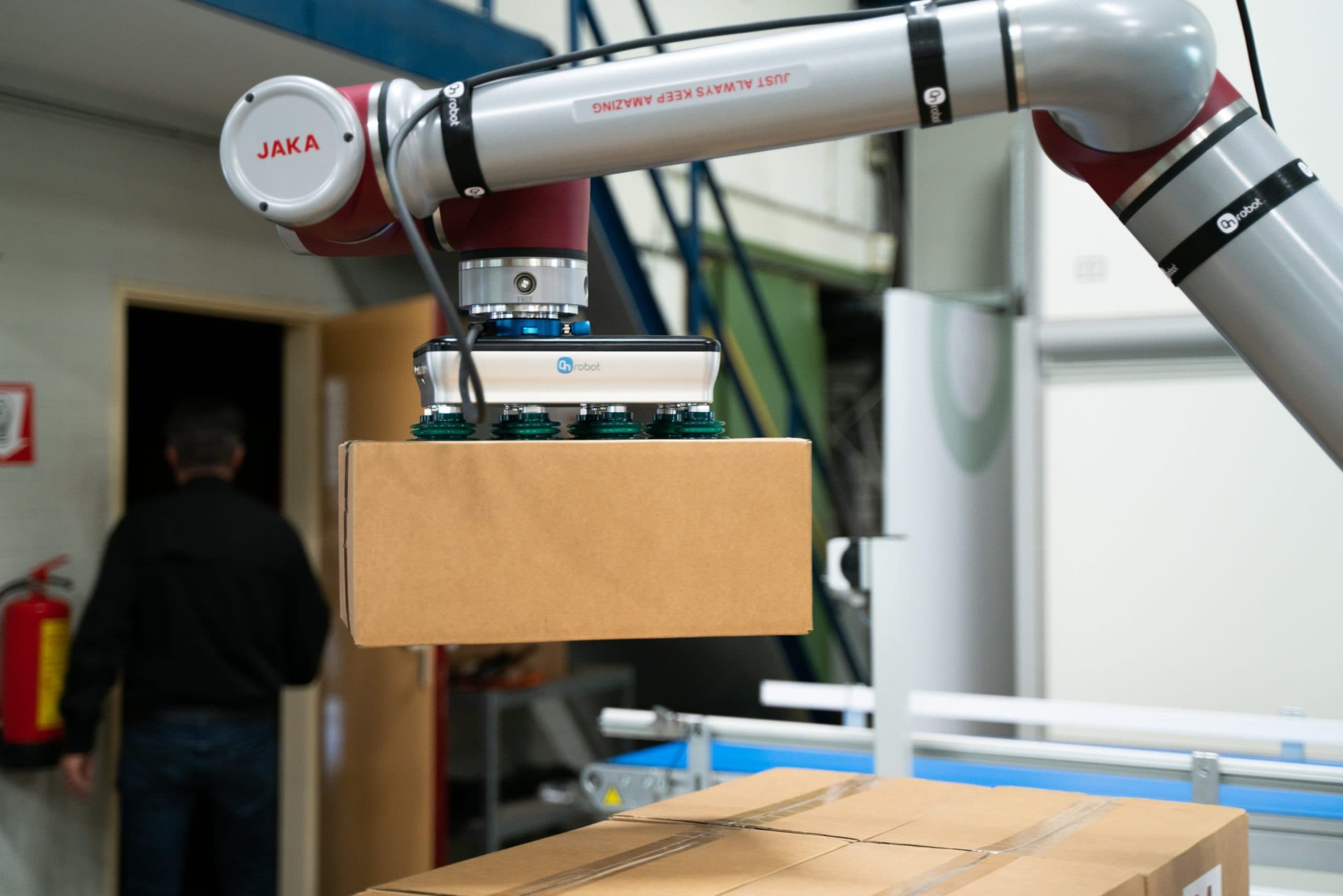
In the tight labor market where attracting talent in logistics is challenging, automation also makes these roles more appealing by reducing the physical strain of repetitive tasks such as lifting heavy loads for palletising. This paints a better picture for the industry, allowing it to create opportunities for employees to focus on problem-solving and tech-oriented skills rather than simply perform manual labor, which aligns with the country’s goal of building a future-ready workforce and a more attractive industry to enter.
In a study conducted by Zapier, 94% of workers say they perform repetitive, time consuming tasks in their role, and 90% of workers say that automation has improved lives around the workplace. Contrary to popular belief, automation does not replace the human worker. Instead, it acts as the productivity tool for businesses as they help them achieve performance objectives, increase quality, and provide a better working environment for employees.
Stacking Up Against the Competition
Adopting automation does sound like the solution for logistics SMEs in Singapore, but there are various speed bumps in this plan. Diving deeper into the landscape of organizations in Singapore, digitalisation among SMEs has improved over the years where technology adoption rates increased from 73.8% in 2018 to 94.3% in 2022, but significant gaps between them and the larger firms continue to linger.
According to the Infocomm Media Development Authority (IMDA), the technology adoption intensity of SMEs improved to 2.1 in 2022, but is still considerably lower than the 5.7 for their larger counterparts — highlighting the disparity even in the adoption of technology and automation apart from just competing for talent.
With that, operational efficiency and talent acquisition might continue to elude SMEs as they simply cannot stack up against international organizations. Only operating with receipts not exceeding S$100 million, SMEs also have employment of less than 200 workers. They must allocate sufficient resources to advanced technology without impacting their budget significantly.
SMEs often struggle with resource allocation for advanced technologies without notably impacting their budgets. While Industry 4.0 presents opportunities for creating a vibrant logistics sector, its implementation and the associated job roles can be challenging for SMEs to budget for and ultimately fill.
Supporting SMEs and their Automation Journey
Recognising the distinct challenges faced by SMEs in Singapore, OnRobot’s D:PLOY platform is designed with SMEs in mind, offering a streamlined approach to robotics automation that requires minimal engineering expertise.
The typical learning curve when deploying an automated solution within a business can be steep, with many moving parts needed to make the solution work. There are lots of back and forth, along with multiple parties needed to program the solution to the unique requirements of the SME. Compared to large corporations with more resources and in-house teams to aid automation adoption, some SMEs do not have manpower and engineering expertise to incorporate the solution.
D:PLOY is the first automatic development platform for collaborative robots (cobots) and industrial robots that enables the configuration of complete, off-the-shelf robotic systems for high-mix applications — such as palletising and machine tending. It is designed to do fast, easy in-house workpiece changeovers with no programming, and can be put to work with same-day installation.
This allows SMEs to gain automated assistance as smaller players against big corporations. D:PLOY aims to empower SMEs to overcome the barriers to automation, as they gain significant advantages from the economies of scale of these standard systems, including lower cost and full price transparency, immediate availability, and the flexibility of easy, built-in redeployment for workpiece changeovers.
James Taylor, chief commercial officer for OnRobot said: “With D:PLOY, we are taking the next logical step in simplifying the overall application rather than just focusing on individual components within the robot cell.”
“
“While robotics is the most logical solution, there are still barriers to deploying robotics as it can be a time-consuming and costly endeavor for SMEs, who often lack the capital, programming skills and scale to justify the investment.”
Automating for Today
In closing, embracing entry-level automation solutions offers SMEs in Singapore’s logistics sector a viable path forward. By integrating accessible Industry 4.0 technologies, these businesses can increase operational efficiency, reduce dependency on physical labor, and make their workplaces more appealing to a younger workforce.
This shift not only addresses immediate labor challenges but also positions logistical SMEs as agile, innovative contributors within Singapore’s vibrant SME landscape, ensuring their resilience and continued competitiveness in a demanding market.
Logistics might not be a trendy industry to enter, but by breaking down automation barriers and improving its image, it just might be the next up.