Electrifying mobility for the logistics industry
17 Jul 20238 min read

Summary
- The logistics and supply chain industry is leading the shift toward electric vehicles (EVs), driven by efficiency gains, reduced emissions, and lower long-term costs. Advances in technology, infrastructure, and government incentives have accelerated EV adoption, especially in last mile delivery and urban mobility where two-wheeled electric vehicles (2WEVs) are increasingly dominant.
- EVs deliver compelling economic and operational benefits, from tenfold lower refueling costs to fewer moving parts and higher energy efficiency. They help businesses meet Environmental, Social and Governance (ESG) targets while improving reliability, lowering capital and maintenance costs, and enhancing safety. However, challenges such as high upfront costs, limited charging infrastructure, and long recharge times still hinder faster adoption.
- Southeast Asia, particularly Malaysia, is aggressively advancing EV adoption through tax incentives, the Low Carbon Mobility Blueprint 2021–2030, and growing infrastructure investment. Logistics players like DHL and Blueshark demonstrate the viability of electrified fleets and battery-swapping solutions that cut running costs and boost sustainability. The transition to EVs marks not only a cost-efficient move but a defining step toward a cleaner, smarter logistics ecosystem.
Human mobility is undergoing a revolution as the shift began in electrifying vehicles. At no point in history has there been a more pronounced shift towards cleaner propulsion of transportation since the proliferation of the internal combustion engine (ICE) vehicles that produce carbon dioxide and causes pollution.
The logistics and supply chain industry are in many ways at the forefront of this sea of change. Said industry is ahead of the curve as more companies are now beginning to embrace electric vehicles(EVs). They lean towards improved operation efficiency of deliveries, reduced emissions, and economic benefits of green mobility.
Meanwhile, the fast-paced advancement of EV technology, construction of infrastructure, government subsidies, tax exemptions, and various economic factors have contributed considerably to EV adoption. In turn, there is an increase in the use of EVs for transporting goods for large and small-scale businesses alike.
Particularly for last mile delivery due to their efficacy and small carbon footprint. Whilst, two-wheeled electric vehicles (2WEVs) are invaluable for tight urban spaces. Also, 2WEVs support the explosion of the gig economy as a viable replacement for ICE bikes.
Over the next five to ten years, Southeast Asian countries are expected to see significant growth in the 2WEV market. In ASEAN, it could exceed 40M by 2030 as governments and corporations urgently look to address the long-term viability of urban mobility.
More so, they aim to deal with the problematic levels of carbon emissions by the transportation sector. Many ASEAN countries including Malaysia target to largely phase out ICE motorcycles with 2WEVs by 2030.
The benefits of going electric
EVs cost about ten times less to ‘refuel’ and can reach 90%-95% energy efficiency compared to ICEs with 17%-21%. They also contain much fewer moving parts than traditional ICE vehicles, reducing maintenance and enhancing reliability.
EVs are also incredibly efficient, converting over 77% of the electrical energy from the grid to driving power compared to 12%-30% power conversion for ICE vehicles. Compared to ICEs, EVs boast significantly lower fuel costs with charging stations and battery swapping proving a more cost-effective way to refuel.
Additionally, EVs use less energy in stop-and-go city traffic. This reduces noise pollution and air pollution making them a highly compelling option for delivery and courier services. In turn, helping businesses achieve a better bottom line.
For fleet operators, the concern is not only limited to managing the fleet. There is also the total costs to do so and to maintain it. For example, there is the cost of procuring the fleet, your capital expenditure.
Also, there are increasingly costly operational expenses like rising fuel costs, depreciation, high repair costs, and days off the road to contend with. Consequently, the impact on consumers is that service quality and customer satisfaction drop.
EVs can also address the Environmental Social and Governance (ESG) equation. Wherein, companies now needs to report and offset their carbon footprint or face penalties.
Maintaining delivery fleets comprise of ICE vehicles is simply not sustainable and going electric can create significant additional value for companies. Meanwhile, EVs can render ongoing cost savings such as lower energy costs, lower capital expenditure, depreciation and repair costs, and improved driver and rider safety.
Barriers to overcome on the road towards industry progress
High vehicle costs render the need for more standardized charging systems to catalyze mass EV supply chain scaling and optimization. There is a lack of charging locations. Also, the long wait times for charging are among the top barriers hindering fleets and consumers from adopting EVs.
The shift to EVs will require collective action and an ecosystem of partners, including governments, charging infrastructure providers,and automakers. It also covers consumers working cohesively to map out and bridge the transition to EVs.
In 2015, privately owned vehicles accounted for 29.4 million, of which 13.8 million are cars and 13 million are motorcycles. Due to Malaysia’s reliance on these vehicles, the transportation sector in Malaysia is the second biggest polluter of carbon dioxide emissions after electric power generation.
The carbon dioxide from the said vehicles renders 96% of all greenhouse gas emissions. Such serves as a wake-up call for everyone to rethink choices before it escalates into an unresolvable problem.
The logistics and supply chain industry is a major contributor to this phenomenon. This is due to the huge volumes of ICE vehicles by large fleet operators. They ply the first to last mile to keep the country and the economy ticking.
Conditions and factors encouraging EV adoption
Many governments are now driving the shift to EVs via policy and incentives. With the increasing ESG commitment from governments across the region, the EV agenda is no longer a “nice to have”, but a mandate. This responsibility is also shared at the corporate level.
By adopting an integrated solution in electrifying the first-to-last mile, fleet operators can meet their ESG targets and lower TCO, CAPEX/OPEX, and carbon footprint. At the same time, they can enhance their green credentials.
Government policies to support the growth and transition to EVs and related infrastructure are expected to remain prominent market drivers. Malaysia committed to net zero carbon emissions by 2050 at the earliest.
The Low Carbon Mobility Blueprint (LCMB) 2021-2030 aims for EVs to achieve at least a 15% share of the total industry volume (TIV) by 2030. It covers the erection of 10,000 units of charging stations by 2025.
The Malaysian government’s various initiatives and exemptions for whole import duty, excise duty, and sales tax for locally-assembled EVs until the end of 2025. In the recent Budget 2023 announcements, they have been also very encouraging for EV adoption and the decarbonization of the transportation industry in Malaysia.
Incentives support EV manufacturers. Thus,they encourage EV adoption while elevating the EV industry and ecosystem expansion.
EVs and logistics: electrifying first-to-last mile transport
The logistics sector is an ideal sector to promote EV usage in ASEAN as it operates in targeted areas. Its operations will lead to rapid infrastructure expansion. This includes more and greater concentration of charging stations in any given area.
Moreover, this could lead to wider adoption of EVs by the consumer market, catalyzed by an expanding EV logistics infrastructure. With most of the world aiming for carbon neutrality in the future, EVs’ impact on the transportation and logistics industries will become increasingly certain over time.
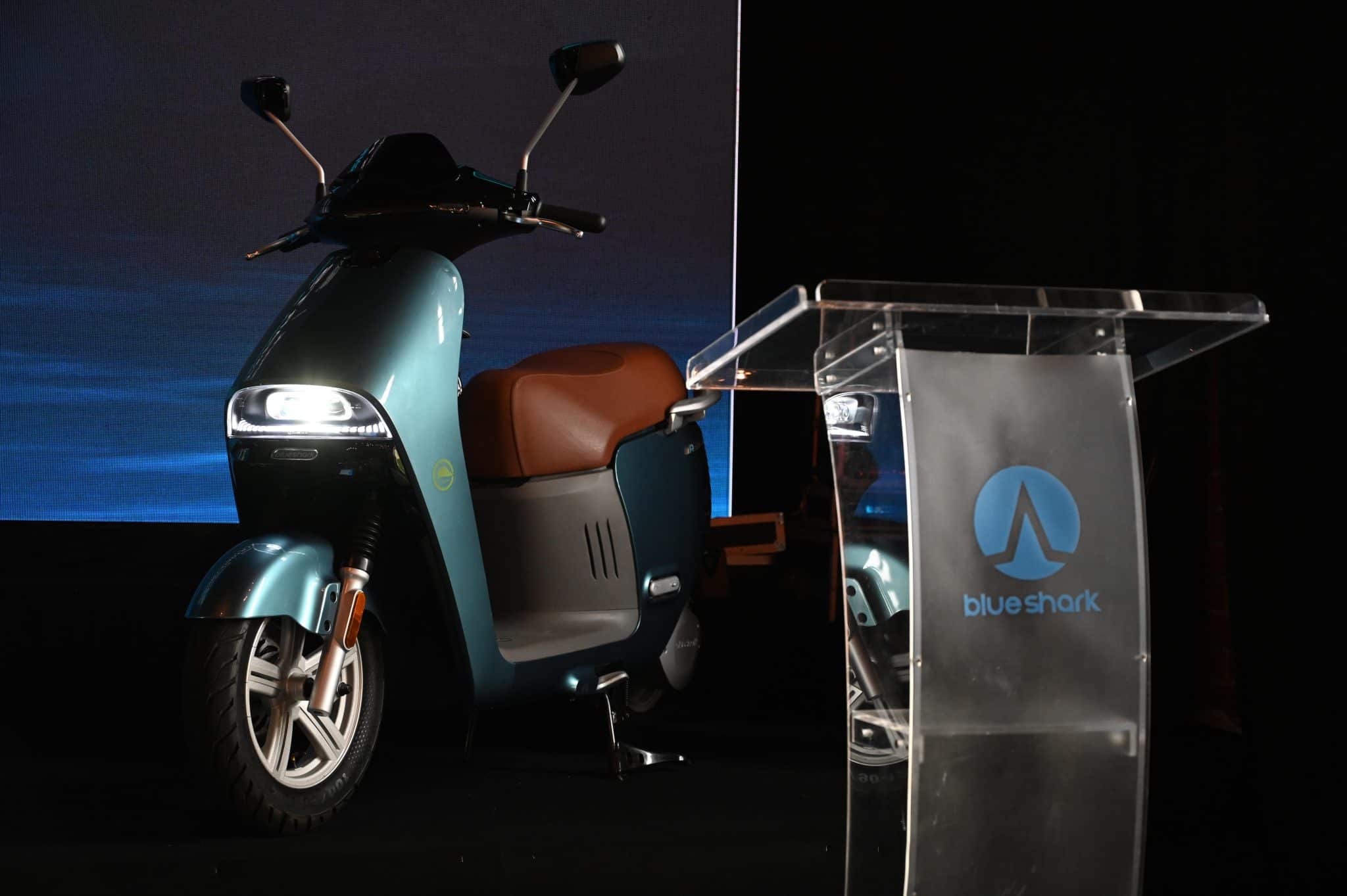
Wherein, ICE vehicles could be phased out sooner than expected. For example, logistics giant DHL will be electrifying 60% of its overall fleet of vehicles by 2030. They are close to 200 EVs in Malaysia alone. Blueshark’s studies compare the riding costs of ICE motorcycles against Blueshark R1 2WEV over 100km in several ASEAN countries.
Given the prevailing petrol price and electricity tariffs, it shows that the Blueshark R1 is eight times cheaper to run over 100km compared to an ICE motorcycle in Malaysia. It is even cheaper in certain neighboring countries.
Additionally, Blueshark had a pilot program with Petronas. It involved 50 p-hailing delivery riders who experienced the R1 Smart Electric Scooter, first-hand for over a month on Malaysian roads. They covered 108,000 km.
The 4,080 battery swaps done during the stint were well received by 97% of riders. Such concludes that battery swapping is the way to go. Doing so enabled a faster, easier, and cheaper mode of transport. Thus, demonstrating the feasibility of Blueshark’s first-to-last mile electrified platform for the logistics industry.
Blueshark sees 2WEVs and battery-swapping technology as crucial to encourage and hasten the widespread adoption of EVs. They overcome issues such as long recharge times, range anxiety, and battery lifecycle management.
Also, they are easier to roll out, cheaper to procure, and can assimilate into current lifestyles and practices more so than their four-wheeled counterparts that can’t use battery-swapping technology.
Foresights on the logistics industry
Electric mobility is rapidly growing across the world and transportation companies are also converting their existing fleet to serve the first-to-last mile in logistics.
Logistics companies will need to invest in charging infrastructure and adapt their operations to derive the maximum benefit in terms of cost savings and operation efficiency that EVs can provide.
Overall, EVs will positively impact the Malaysian logistics industry in the coming years. The key benefits are reduced emissions, lower capital expenditure, and operating costs, lower energy costs, and increased efficiency.
On the side, EV adoption in the logistics industry could also create opportunities for innovation. These are the development of new charging technologies or the integration of EVs with smart logistics systems.
Electromobility is not merely an ambition. It is a significant move towards a more liveable future. EVs are where the world is heading in terms of how people and goods are transported, invariably and almost certainly, toward an electrified future.
(Insights by Jin Chan, Blueshark Ecosystem Sdn Bhd Group COO -ASEAN)